
What Are Corrugated Boxes and Why Are They Used in Packaging?
Boxish provides reliable packaging solutions including corrugated boxes, custom packing boxes, paper bags, and more. As a growing corrugated boxes manufacturer.
 flypped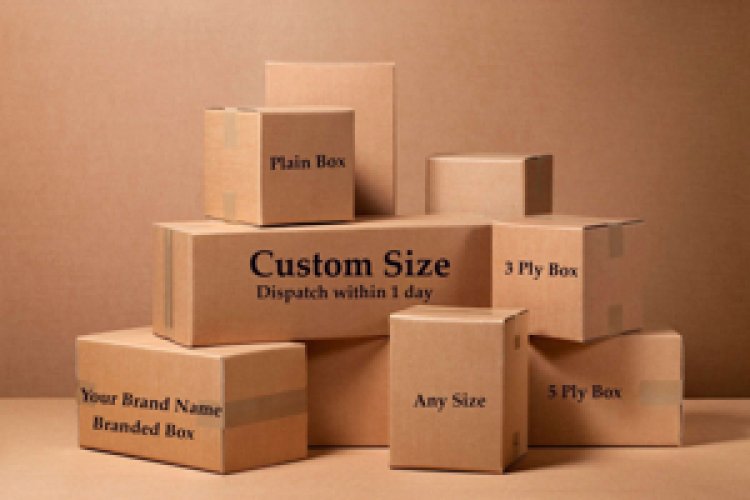
Open any e-commerce delivery and there's a good chance you're holding a corrugated box. Pull it apart and you'll see what makes it work: a wavy inner layer sandwiched between two flat sheets. That simple structure has been moving goods around the world for over a century, and it still hasn't been meaningfully replaced. This guide explains what corrugated boxes actually are, how they're made, and why they remain the go-to choice across industries from food to pharma to furniture.
What Is a Corrugated Box?
A corrugated box is not the same as a cardboard box, though the terms get mixed up constantly. Cardboard is a single thick sheet, like a cereal box or greeting card backing. Corrugated board is a three-layer material: two flat sheets called liners, with a wavy sheet called the flute bonded between them.
The flute is the key. Those arches distribute weight and absorb pressure the way an arch in architecture does, allowing a relatively thin material to hold hundreds of pounds without collapsing. The air pockets the flutes create also act as insulation, which is a bonus for temperature-sensitive shipments.
Flute sizes are standardized by letter: A-flute is the thickest and cushions well, B-flute is thinner and handles puncture resistance better, C-flute sits in the middle and is the most common for general shipping boxes. E and F flutes are thin and used for retail packaging where printing quality matters more than heavy-duty protection.
How Corrugated Boxes Are Made
The manufacturing process runs on a machine called a corrugator. It feeds rolls of kraft paper — the medium for the flute and the liner sheets — through a series of heated rollers. The medium gets molded into the fluted shape under heat and pressure, then adhesive bonds it to the liners in one continuous pass.
The resulting corrugated board is cut, scored, and folded into box blanks, or die-cut into custom shapes. Most of the kraft paper used today comes from a mix of virgin fiber and recycled content. The recycled portion can be substantial — many manufacturers use 70 to 100 percent recycled fiber depending on the strength requirements of the end product.
Why Corrugated Boxes Dominate Packaging
The honest answer is that no single packaging material does as many things as well. Here's what drives the preference across industries:
Strength-to-weight ratio. Corrugated board is lightweight but handles serious compression loads. The fluted structure means a box can hold many times its own weight, which reduces shipping costs without sacrificing protection.
Customizability. Unlike plastic totes or metal containers, corrugated boxes can be die-cut into virtually any shape. Interior dividers, foam inserts, and custom fitments are easy to add. Printing directly on the liner is straightforward, which matters for retail-ready packaging.
Cost. Corrugated is inexpensive relative to its performance. Raw materials are abundant, the manufacturing process is mature and efficient, and the boxes ship flat before assembly, which saves storage space.
Recyclability. Corrugated has one of the highest recycling rates of any packaging material — around 91 percent in the United States according to the Fibre Box Association. It breaks down quickly in composting conditions and generates less landfill waste than most alternatives.
Versatility across temperatures and environments. With the right coatings or liners, corrugated handles humidity, cold storage, and even light moisture exposure. Wax-coated boxes are used for produce and seafood. Double-wall and triple-wall constructions handle industrial parts that would crush standard packaging.
Common Applications Across Industries
E-commerce is the most visible use case right now. The explosion in online retail since 2020 has pushed corrugated box volumes to record levels, as direct-to-consumer shipments replaced retail shelf packaging for millions of product categories.
Food and beverage rely on corrugated for both primary and secondary packaging. Fresh produce, canned goods, bottled beverages, and frozen foods all move through supply chains in corrugated cases. The food industry often needs food-safe adhesives and inks, which corrugated manufacturers supply as standard options.
Electronics and appliances need cushioning as much as containment. Corrugated works here because the flute absorbs shock, and die-cut inserts can cradle irregular shapes precisely. The static-dissipative variants handle sensitive components that standard boxes would damage.
Pharmaceuticals and medical devices require clean, tamper-evident packaging. Corrugated manufacturers produce certified clean-room boxes and can incorporate tamper seals and serialization printing directly into the manufacturing line.
Industrial and automotive parts often move in heavy-duty double or triple-wall corrugated, sometimes in reusable bulk bins. These are cases where the box itself is part of a logistics system rather than a one-way shipping container.
Single-Wall, Double-Wall, and Triple-Wall: What's the Difference?
Wall count refers to how many fluted layers are bonded together. Single-wall is one flute between two liners — the standard box you get from an online order. Double-wall adds a second fluted layer, roughly doubling the compression strength and cushioning. Triple-wall approaches the strength of light plywood and is used for bulk containers, pallet boxes, and heavy machinery parts.
Choosing the right construction is primarily about matching the box strength to the product weight and the shipping environment. Overspecifying wastes money. Underspecifying results in damage claims. Most manufacturers offer free box compression testing to help customers land on the right spec.
Corrugated Boxes and Sustainability
The recycling story is genuinely good. Corrugated fiber can be recycled five to seven times before the fibers shorten too much to be useful, and the infrastructure for collecting and processing it is well established in most markets. Old corrugated containers (OCC) are among the most traded commodities in global paper recycling markets.
The packaging industry has also made measurable progress on right-sizing — shipping products in boxes that actually fit rather than oversized cartons filled with void fill. Variable-size box machines can now cut a custom box around each order in real time, eliminating the empty space that wastes material and inflates freight costs.
None of this means corrugated is perfect. Trees are still the primary raw material even with recycled content in the mix, and the corrugating process is energy-intensive. But compared to most alternatives — plastics, foams, composites — corrugated's end-of-life story is simpler and its infrastructure for recovery is already built.
What to Look for When Sourcing Corrugated Boxes
If you're evaluating corrugated packaging for a product or business, a few specifications matter most: the edge crush test (ECT) rating, which measures the box's stacking strength; the burst strength, which measures puncture resistance; and the flute type, which affects cushioning and print quality.
Most shipping carriers have minimum box specifications for certain weight classes. Checking those requirements before finalizing a box spec prevents the frustrating situation of damaged goods and denied insurance claims. Your corrugated supplier should be able to provide a box certificate with the relevant test results.
The Bottom Line
Corrugated boxes work because the physics is sound, the economics are favorable, and the infrastructure for making and recycling them is already everywhere. No packaging material that's been around for 150 years and still growing market share got there by accident.
Whether you're shipping a 1 lb cosmetics order or a 400 lb industrial component, there's almost certainly a corrugated spec designed for that application. Understanding the basics — flute type, wall count, and test ratings — is enough to make informed decisions and avoid the most common mistakes.
The box you probably pulled apart this morning? It was doing exactly what it was engineered to do.