
Russia Set to Build Nuclear Power Plant on Moon by 2036 in Bold Space Push
MOSCOW – Russia has officially signaled its intent to lead the next frontier of space exploration, announcing...
 prativad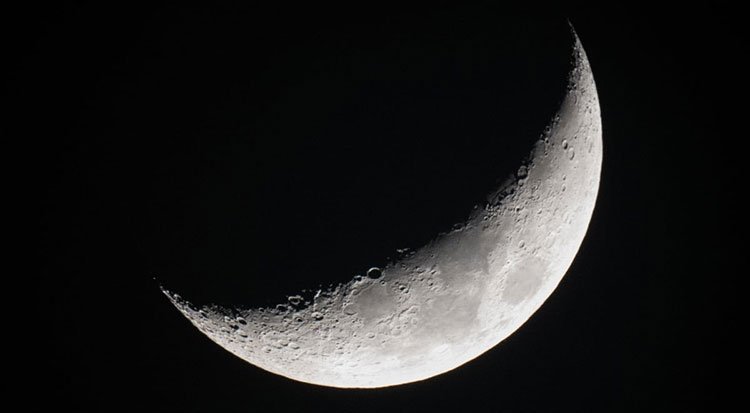
MOSCOW – Russia has officially signaled its intent to lead the next frontier of space exploration, announcing an ambitious plan to establish a nuclear power plant on the lunar surface by 2036.
Strategic Partnership for Lunar Energy
Roscosmos, the Russian state space agency, has confirmed a formal contract with the Lavochkin Association, a leading aerospace company, to spearhead the development of the facility. While the official statement referred to a "power plant," the involvement of state energy giant Rosatom and the Kurchatov Institute—Russia’s premier nuclear research facility—confirms the project’s nuclear nature.
The roadmap for the next decade includes:
Design & Development: Creating specialized spacecraft capable of transporting reactor components.
Testing Phase: Rigorous ground-based and flight tests to ensure stability in the lunar environment.
Deployment: Building the necessary infrastructure on the Moon's surface between 2026 and 2036.
Powering the Future of Lunar Exploration
The primary goal of the nuclear facility is to provide a reliable, long-term energy source for Russia’s lunar program. This includes powering robotic rovers, scientific observatories, and the International Lunar Research Station (ILRS)—a joint venture with China established in 2021.
"This project marks a transition from one-off missions to a permanent scientific presence on the Moon," Roscosmos stated, highlighting the shift toward long-term lunar habitation.
The New Global Space Race
This move comes at a critical time for Russia’s space program. Once a pioneer with Yuri Gagarin’s historic 1961 flight, Moscow has recently faced setbacks, including the crash of the Luna-25 mission in 2023.
Meanwhile, the geopolitical landscape of space has shifted:
US Dominance: NASA, through its Artemis program and partnerships with ESA and JAXA, aims to establish a base camp by the early 2030s.
Private Innovation: SpaceX has disrupted the launch market, previously a Russian stronghold.
Emerging Players: South Korea has joined the fray, targeting a permanent lunar base by the mid-2040s.
A Sino-Russian Alliance
By pivoting toward China, Russia seeks to maintain its relevance in a race where the Moon is no longer just a destination, but a launchpad for future missions to Mars. The nuclear plant is seen as the "beating heart" of this alliance, providing the high-density energy required to sustain life and research where solar power is often insufficient.