
Half Moon Yoga Poses for Balance: A Complete Guide to Strength, Stability, and Focus
Balance is one of the most important aspects of a healthy yoga practice. It enhances physical stability, improves concentration, and develops body awareness. Among the many balancing postures in yoga, half moon variations are some of the most effective and rewarding poses to master. Practicing half moon yoga poses for balance can help strengthen the body, improve coordination, and cultivate mental focus while creating a sense of inner harmony.Half Moon Pose, known as Ardha Chandrasana in Sanskrit, is a graceful standing posture that combines flexibility, strength, and balance. Over time, yoga practitioners have developed several variations of this pose, each offering unique benefits and challenges. Whether you are a beginner learning to stand steadily on one leg or an experienced yogi looking to refine your practice, incorporating half moon yoga poses for balance into your routine can significantly enhance your physical and mental well-being.
 sagesyoga2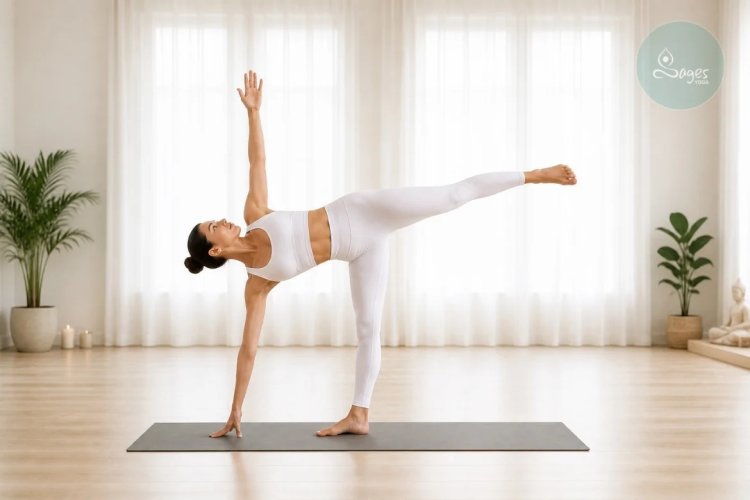
Balance is one of the most important aspects of a healthy yoga practice. It enhances physical stability, improves concentration, and develops body awareness. Among the many balancing postures in yoga, half moon variations are some of the most effective and rewarding poses to master. Practicing half moon yoga poses for balance can help strengthen the body, improve coordination, and cultivate mental focus while creating a sense of inner harmony.
Half Moon Pose, known as Ardha Chandrasana in Sanskrit, is a graceful standing posture that combines flexibility, strength, and balance. Over time, yoga practitioners have developed several variations of this pose, each offering unique benefits and challenges. Whether you are a beginner learning to stand steadily on one leg or an experienced yogi looking to refine your practice, incorporating half moon yoga poses for balance into your routine can significantly enhance your physical and mental well-being.
Understanding Half Moon Pose
The Sanskrit word "Ardha" means half, "Chandra" means moon, and "Asana" means pose. Together, Ardha Chandrasana translates to Half Moon Pose. The shape of the posture resembles a half moon, symbolizing calmness, balance, and expansion.
Half Moon Pose requires the practitioner to balance on one leg while extending the opposite leg parallel to the floor and opening the chest toward the sky. This combination of strength, flexibility, and concentration makes it one of the most beneficial standing yoga postures.
Many yoga teachers recommend half moon yoga poses for balance because they challenge the body and mind simultaneously, helping practitioners develop stability both physically and mentally.
Why Balance is Important in Yoga
Before exploring various half moon poses, it is helpful to understand why balance training is essential.
Balance-focused yoga poses help:
- Improve posture
- Strengthen stabilizing muscles
- Enhance coordination
- Reduce the risk of falls
- Increase concentration
- Promote mindfulness
- Build confidence
Practicing half moon yoga poses for balance strengthens the connection between the body and mind, leading to greater awareness and control in everyday life.
Traditional Half Moon Pose (Ardha Chandrasana)
The classic Half Moon Pose serves as the foundation for many balancing variations.
How to Practice
- Begin in Triangle Pose.
- Shift your weight onto the front foot.
- Place your lower hand on the floor or a yoga block.
- Lift the back leg until it is parallel to the ground.
- Extend the top arm toward the ceiling.
- Open the chest and hips.
- Hold for several breaths before switching sides.
This foundational posture is one of the most effective half moon yoga poses for balance, helping strengthen the legs, core, and ankles while improving concentration.
Benefits of Half Moon Yoga Poses for Balance
Strengthens the Legs
Balancing on one leg requires the muscles of the standing leg to work continuously. This strengthens the quadriceps, calves, hamstrings, and glutes.
Improves Core Stability
The abdominal muscles engage throughout the pose to maintain alignment and stability. Practicing half moon yoga poses for balance helps build a stronger core, which supports better posture and movement.
Enhances Coordination
Maintaining balance while coordinating arm, leg, and torso movements improves overall body awareness and motor control.
Develops Mental Focus
Balance poses require concentration. By directing attention to breath and alignment, practitioners develop mindfulness and mental clarity.
Increases Flexibility
Half moon variations stretch the hamstrings, hips, chest, and shoulders, promoting greater mobility and flexibility.
Revolved Half Moon Pose (Parivrtta Ardha Chandrasana)
One of the more challenging half moon yoga poses for balance is Revolved Half Moon Pose.
This variation adds a spinal twist while balancing on one leg.
How to Practice
- Begin in a standing forward fold.
- Shift weight onto one leg.
- Extend the opposite leg behind you.
- Place one hand on the floor or a block.
- Twist the torso and lift the opposite arm upward.
Benefits
- Improves balance and coordination
- Strengthens the legs and core
- Stimulates digestion
- Enhances spinal mobility
- Builds concentration
Because of the added twist, this variation demands greater focus and stability.
Bound Half Moon Pose
Bound Half Moon Pose is an advanced version of Ardha Chandrasana that combines balance, flexibility, and strength.
How to Practice
- Enter Half Moon Pose.
- Bend the lifted leg.
- Reach the top hand back and hold the foot.
- Open the chest while maintaining balance.
Benefits
Among advanced half moon yoga poses for balance, this variation offers:
- Deep hip opening
- Increased spinal flexibility
- Improved shoulder mobility
- Enhanced balance skills
- Greater body awareness
Supported Half Moon Pose
For beginners, Supported Half Moon Pose provides an excellent introduction to balancing postures.
How to Practice
Use:
- A yoga block under the lower hand
- A wall behind the body
- A chair for additional support
Benefits
Supported variations allow practitioners to safely experience the advantages of half moon yoga poses for balance while gradually building confidence and strength.
Dynamic Half Moon Flow
A dynamic sequence involving repeated transitions into and out of Half Moon Pose can significantly improve balance and coordination.
Example Flow
- Warrior II
- Triangle Pose
- Half Moon Pose
- Warrior III
- Standing Pose
This movement-based approach challenges stabilizing muscles while enhancing overall body control.
Many teachers incorporate dynamic half moon yoga poses for balance into vinyasa classes to build endurance and focus.
Common Challenges in Half Moon Pose
Many students initially struggle with balancing postures. Common difficulties include:
Wobbling
Balancing on one leg can feel unstable at first.
Solution:
Focus on a fixed point and engage the core muscles.
Tight Hamstrings
Limited flexibility may make alignment difficult.
Solution:
Use yoga blocks and bend the standing knee slightly if needed.
Closed Chest
Many practitioners allow the chest to collapse toward the floor.
Solution:
Actively rotate the upper torso and lift the top shoulder.
With consistent practice, these challenges gradually diminish.
Tips for Improving Balance
To get the most from half moon yoga poses for balance, consider these practical tips:
Focus on Your Breath
Steady breathing helps calm the nervous system and improves concentration.
Use Drishti
Choose a fixed point to focus your gaze. This stabilizes both the body and mind.
Engage the Core
Strong abdominal engagement creates greater stability.
Practice Regularly
Balance improves through repetition and patience.
Strengthen Supporting Muscles
Exercises that target the ankles, legs, and core can enhance your performance in balancing poses.
Mental Benefits of Half Moon Yoga Poses for Balance
While the physical advantages are obvious, the mental benefits are equally important.
Regular practice can:
- Improve focus
- Reduce anxiety
- Build self-confidence
- Increase patience
- Enhance mindfulness
The concentration required during half moon yoga poses for balance trains the mind to remain present and centered, even during challenging situations.
Incorporating Half Moon Poses into Your Yoga Practice
Half moon variations fit well into many yoga styles, including:
- Hatha Yoga
- Vinyasa Yoga
- Ashtanga Yoga
- Power Yoga
- Iyengar Yoga
They are often practiced after standing poses such as:
- Warrior II
- Triangle Pose
- Extended Side Angle Pose
This sequence prepares the body for effective balance and alignment.
Safety Considerations
Although generally safe, some practitioners should exercise caution.
Avoid or modify half moon yoga poses for balance if you have:
- Recent ankle injuries
- Knee instability
- Hip injuries
- Severe vertigo
- Chronic balance disorders
Using props and practicing under the guidance of a qualified instructor can help ensure safety.
Why Half Moon Poses Are Essential for Every Yogi
Half moon variations offer a unique combination of strength, flexibility, concentration, and grace. Unlike many other yoga postures, they challenge nearly every aspect of physical and mental fitness simultaneously.
The regular practice of half moon yoga poses for balance develops not only a stronger body but also a calmer and more focused mind. These poses teach patience, resilience, and adaptability—qualities that extend far beyond the yoga mat.
Conclusion
Practicing half moon yoga poses for balance is one of the most effective ways to improve stability, coordination, strength, and concentration. From the traditional Ardha Chandrasana to advanced variations like Revolved Half Moon and Bound Half Moon, these postures provide a wide range of physical and mental benefits.
Whether you are a beginner seeking better balance or an experienced yogi aiming to deepen your practice, half moon poses offer valuable opportunities for growth. Through consistent practice, proper alignment, and mindful breathing, you can develop greater confidence, body awareness, and inner calm.
As you continue your yoga journey, incorporating half moon yoga poses for balance into your routine can help create a strong foundation for both physical health and mental well-being, allowing you to move through life with greater stability, grace, and focus.