
Why Is Polyester Fabric a Practical Choice for Textile Businesses?
Polyester fabric offers durability, versatility, easy care and colour retention for textile businesses across apparel, sportswear, home and industrial uses.
 Avon Commercial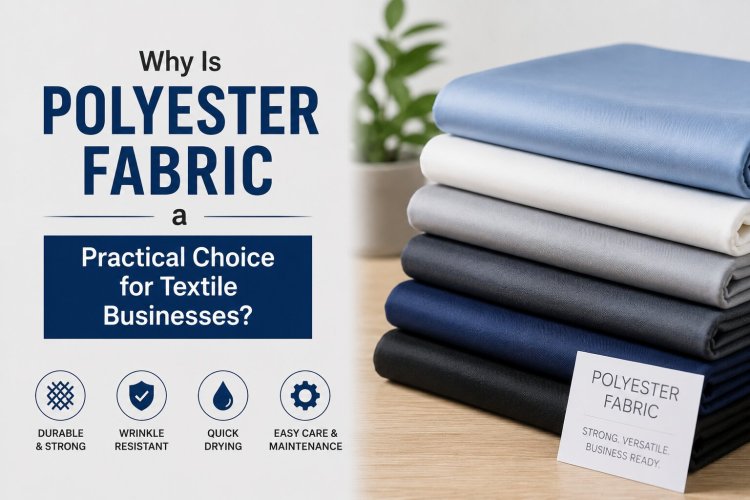
Textile businesses need materials that balance performance, cost, versatility, and consistent quality. Polyester fabric has become a widely used option because it can support a broad range of applications, from apparel and home textiles to industrial and technical products.
Its popularity comes from a combination of practical properties. Depending on its construction and finishing, polyester can offer durability, dimensional stability, colour retention, wrinkle resistance, and relatively easy care. These characteristics make it relevant for manufacturers serving different markets and production requirements.
Why Does Polyester Have Broad Industrial Use?
Polyester is a synthetic fibre that can be engineered into fabrics with different weights, textures, finishes, and performance characteristics. This adaptability allows manufacturers to select suitable constructions for specific products rather than relying on one standard fabric type.
Textile businesses may use polyester in:
- Apparel products requiring durability, easy maintenance, and consistent appearance during regular use.
- Home textiles such as curtains, bedding, upholstery materials, and decorative furnishing products.
- Sportswear where moisture management, flexibility, and lightweight construction can be important.
- Workwear and uniforms that require fabrics capable of handling frequent wear and repeated washing.
- Industrial textiles where controlled strength, stability, and specialised performance are required.
This broad application range gives polyester commercial relevance across multiple textile sectors.
What Properties Make Polyester Practical for Manufacturers?
The performance of polyester depends on fibre structure, yarn construction, fabric weight, weave or knit, and finishing. However, several characteristics commonly make it attractive to textile manufacturers.
Durability
Polyester fibres are generally resistant to stretching and abrasion, which can help fabrics maintain their structure during regular use. This makes suitable polyester constructions useful for products that need dependable service life.
Dimensional Stability
Polyester can maintain its shape relatively well when properly processed and cared for. This characteristic can be valuable for garments and textiles where excessive shrinkage or deformation could affect product quality.
Easy Maintenance
Many polyester fabrics are relatively easy to wash and dry compared with some natural-fibre alternatives. This can be beneficial for uniforms, everyday apparel, hospitality textiles, and other products requiring frequent maintenance.
How Does Polyester Support Apparel Production?
The apparel industry uses polyester across casualwear, sportswear, uniforms, outerwear, fashion products, and performance clothing. Its characteristics can be adapted through different fabric constructions and blends.
Lightweight polyester can be used for shirts, linings, sportswear, and flowing garments, while heavier constructions may be suitable for jackets, uniforms, and structured products.
Polyester can also be blended with cotton, elastane, viscose, or other fibres. Blending allows manufacturers to combine different properties within one textile.
Polyester and Cotton Blends
A polyester-cotton blend can balance the familiar comfort of cotton with some of polyester's durability and dimensional stability. These fabrics are commonly considered for uniforms, workwear, shirts, and everyday clothing.
Polyester and Elastane Blends
Adding elastane can provide stretch and recovery, making the resulting textile useful for fitted garments, activewear, and products requiring greater freedom of movement.
Why Is Colour Retention Important?
Colour consistency is a major consideration for commercial textile production. Customers generally expect garments and other textile products to maintain an attractive appearance throughout their useful life.
Polyester can provide good colour retention when appropriate dyes and processing methods are used. This makes it useful for products where vibrant or consistent shades are important.
Manufacturers can select different colours, prints, and finishes to create collections for particular seasons, brands, or customer segments. Uniform manufacturers can also benefit from consistent colour specifications across repeated production runs.
For businesses sourcing polyester fabric for textile businesses, colour consistency should be assessed alongside fabric weight, construction, finishing, and batch-to-batch quality.
Can Polyester Work for Sportswear and Performance Textiles?
Sportswear places specific demands on textile materials. Garments may need to manage moisture, allow movement, dry efficiently, and withstand repeated washing.
Certain polyester constructions can support these requirements through lightweight structures and moisture-management finishes. Mesh, knitted, and specialised performance fabrics can be designed to improve airflow and comfort during physical activity.
Polyester is therefore frequently considered for:
- Sports jerseys and training apparel designed for active movement and repeated washing.
- Lightweight athletic garments where flexibility and moisture management can support wearer comfort.
- Outdoor clothing requiring durable construction and resistance to regular environmental exposure.
- Performance textiles incorporating specialised finishes for particular functional requirements.
The actual performance depends on fabric construction and finishing, so manufacturers should evaluate the technical specification rather than relying only on the fibre name.
What Role Does Polyester Play in Home Textiles?
Polyester is also relevant to household and interior textile production. Its durability, colour options, and maintenance characteristics make it suitable for products that experience regular use.
Curtains, upholstery fabrics, bedding, cushions, table coverings, and decorative textiles may incorporate polyester in different forms.
Curtains and Furnishing Fabrics
Polyester can be produced in lightweight or heavier constructions depending on the required appearance and function. It can also accommodate different colours and patterns for interior design collections.
Bedding and Household Products
Suitable polyester textiles can provide durability and easy maintenance for certain bedding and household applications. Blended fabrics may also be selected when manufacturers want to combine polyester with other fibre characteristics.
How Should Businesses Evaluate Polyester Fabric Quality?
Choosing a fabric based solely on price can create problems during manufacturing. Textile businesses should assess technical specifications and quality consistency before placing commercial orders.
Important factors include:
- Fabric Weight: Check whether the GSM matches the intended application and garment construction.
- Width: Confirm usable fabric width to support efficient cutting and production planning.
- Construction: Review the weave or knit structure for the desired strength, flexibility, and appearance.
- Finish: Consider treatments that affect softness, texture, water resistance, or other performance properties.
- Colour: Confirm shade consistency and colourfastness requirements for the finished product.
- Shrinkage: Conduct suitable testing to understand dimensional changes during processing and washing.
- Strength: Assess tensile and tear performance when durability is important for the intended application.
Clear specifications help buyers compare suppliers and reduce the risk of receiving unsuitable materials.
Is Polyester Suitable for Sustainable Textile Strategies?
Sustainability is increasingly influencing textile purchasing decisions. Polyester is derived from synthetic polymer materials, so businesses should consider its complete lifecycle rather than assessing sustainability based on one property.
Recycled polyester can provide an alternative sourcing option by using recovered plastic materials as a feedstock. However, businesses should evaluate the relevant certification, recycled content, production process, traceability, and end-of-life considerations.
Recycled Material Options
Where appropriate, manufacturers may consider recycled polyester for products designed around recycled content requirements. Certifications can help businesses verify claims and maintain transparency within their supply chains.
Product Longevity
Durable textiles can support longer product use, which is another consideration within a broader sustainability strategy. Manufacturers should balance durability with responsible sourcing, efficient production, waste reduction, and appropriate product care.
Why Is Supplier Reliability Important?
Consistent material supply is essential for textile businesses producing regular commercial orders. Differences in fabric weight, colour, construction, or finishing between shipments can affect production quality and finished-product consistency.
Before selecting a supplier, businesses should evaluate product specifications, quality procedures, order quantities, lead times, logistics, packaging, and communication.
A reliable sourcing partner should be able to understand technical requirements and provide suitable materials consistently. Avon Commercial supports commercial sourcing requirements across textile and other material categories, helping businesses coordinate product requirements with supply needs.
Long-term supplier relationships can also improve forecasting, recurring order planning, quality communication, and supply continuity.
How Can Businesses Control the Total Cost?
The purchase price is only one part of textile procurement. Businesses should consider the complete cost of acquiring, processing, storing, and using the fabric.
Factors such as shipping, import expenses, fabric waste, quality defects, storage, processing requirements, and delivery delays can affect the final cost of production.
A practical procurement strategy should therefore compare suppliers based on overall value rather than simply selecting the lowest quotation.
Manufacturers can also improve cost control through accurate fabric specifications, efficient cutting plans, suitable order quantities, quality checks, and reliable production scheduling.
FAQs About Polyester Fabric
Why is polyester widely used in textile manufacturing?
Polyester is widely used because it can offer durability, dimensional stability, colour retention, easy maintenance, and flexibility across apparel, home, sportswear, and industrial textile applications.
Can polyester fabric be used for clothing?
Yes. Polyester can be used for shirts, sportswear, uniforms, jackets, dresses, activewear, outerwear, and many other apparel products depending on its construction and finishing.
Is polyester suitable for sportswear?
Certain polyester fabrics are well suited to sportswear because they can be lightweight and designed with moisture-management, airflow, and performance-oriented properties.
What should businesses check before buying polyester fabric?
Businesses should evaluate fabric weight, width, construction, colour, finish, shrinkage, strength, quality consistency, minimum order quantities, and delivery requirements.
Is recycled polyester available for textile production?
Yes. Recycled polyester is produced using recovered materials and can be considered by businesses seeking recycled-content options. Appropriate certifications should be checked to verify material claims.
Conclusion
Polyester fabric remains a practical material for textile businesses because of its durability, versatility, dimensional stability, colour options, and relatively easy maintenance. Its adaptability allows manufacturers to develop apparel, sportswear, uniforms, home textiles, and specialised products using different constructions and finishes.
However, successful textile production depends on selecting the right specification for each application. Fabric weight, construction, fibre blend, finishing, colour consistency, strength, and shrinkage should all be evaluated before commercial procurement.
Businesses should also consider supplier reliability, logistics, total cost, quality control, and sustainability requirements when developing their sourcing strategy. With careful material selection and dependable supply, polyester can support efficient production and diverse textile product ranges.