

How to Search a Trademark Before You Apply: A Practical Guide
Learn how to conduct a trademark search, identify potential conflicts, check pending applications, and know when professional legal help is needed.
 zulkifil83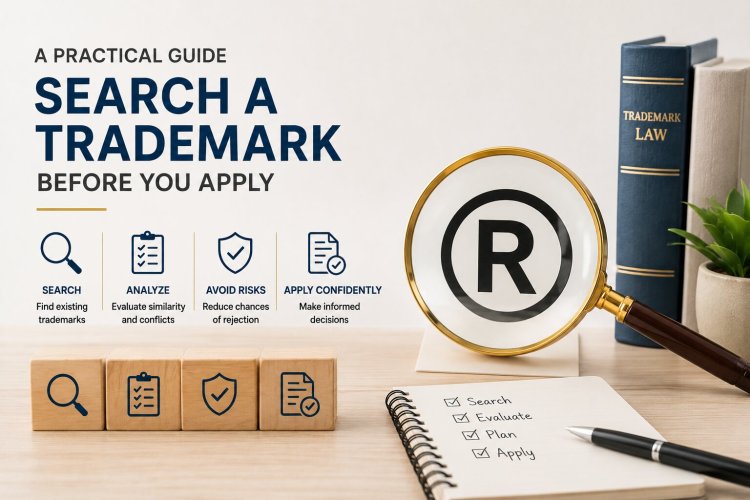
Filing a trademark application without first checking whether the name is already taken is a bit like signing a lease without seeing the property. It might work out — but if it doesn't, the cost of undoing it is far higher than the cost of checking in the first place.
Most business owners know they should search before filing. Fewer know how to actually do it properly, or where a basic search stops being useful and a professional one becomes necessary. This guide walks through the practical side of that process.
Start With a Direct Search
The first step is usually the simplest: search the exact name or logo text you're planning to use through the relevant trademark registry. This tells you whether an identical mark already exists in the same or a related class of goods and services.
A direct search is quick, and it catches the most obvious problem — someone already registered exactly what you wanted. But it only catches exact matches. It won't flag a name that sounds the same, is spelled differently, or uses a similar logo concept. That's where most self-run searches fall short without anyone realizing it.
Search for Variations, Not Just Exact Matches
Trademark conflicts rarely come from identical names. They come from names that are close enough to create confusion in a customer's mind. A thorough search needs to account for:
- Phonetic similarity — names that sound alike even if spelled differently
- Visual similarity — logos or wordmarks that share a similar look or layout
- Conceptual similarity — different words that convey the same idea or imagery
- Related classes — marks registered in a different but commercially related category
Skipping this step is the single most common reason a "clean" self-search later turns out to have missed something important.
Check Pending Applications, Not Just Registered Marks
A search that only looks at already-registered trademarks misses half the picture. Pending applications matter too — if someone filed for a similar mark last month, it may not show up as "registered" yet, but it can still create a conflict down the line.
This is one of the areas where a manual, text-based search is most likely to miss something, simply because pending filings aren't always indexed or displayed the same way as completed registrations.
Understand What the Results Actually Mean
Getting a list of similar marks back from a search is only half the job. The harder part is interpreting what those results actually mean for your specific situation.
Two marks can share a word and still coexist without any real conflict — if they operate in unrelated industries, target different customers, and carry little risk of confusion. On the other hand, two marks with no shared word at all can still create a problem if their overall commercial impression is too close.
This is the point where a lot of business owners either move forward with unnecessary anxiety over a harmless similarity, or — worse — dismiss a genuine risk because it "looked" different enough on the surface.
When a DIY Search Is Enough — and When It Isn't
A self-run search is a reasonable starting point for narrowing down options early in the branding process. It's fast, free or low-cost, and useful for ruling out obvious conflicts before you get attached to a name.
It tends to fall short when:
- The proposed mark includes a design element or logo, not just text
- The business plans to operate in more than one class of goods or services
- Early results show anything even loosely similar and you need a real risk assessment
- The brand name is central to a larger investment — packaging, signage, a domain, a marketing budget already being planned around it
At that point, a professional review adds real value, mainly because it applies legal judgment to the results rather than just returning a list of matches.
A Simple Way to Think About Timing
The earlier a search happens in the branding process, the more flexibility a business still has. Searching before you've printed signage, built a website, or launched a social media presence means a conflict is simply a name change — inconvenient, but manageable.
Searching after those investments are already made turns the same conflict into a full rebrand, which is a very different problem in terms of both cost and disruption.
If you want to walk through what a complete search actually covers step by step, the practical guide breaks down the process in more detail.
Final Thoughts
A trademark search isn't just a box to check before filing — it's a planning tool. Done properly, it tells you whether your proposed name is safe to build a business around, where the real risks are, and whether any changes are worth making before you commit further time and money.
Treating it as an early, practical step — rather than an afterthought — is usually what separates a smooth registration process from a costly one.
Frequently Asked Questions
Is a free online search enough before filing a trademark?
A free search is a reasonable first step for ruling out exact matches. Still, it typically won't catch phonetic, visual, or conceptual similarities — which are just as likely to cause a conflict.
How far back should a trademark search look?
It should cover both currently registered marks and pending applications, since a pending filing can still create a conflict even if it hasn't been fully registered yet.
Does a similar result always mean I can't use my proposed name?
No. Similarity has to be assessed in context — factors such as the industry, the goods or services involved, and the overall impression of the marks all matter when deciding whether a conflict is real.
Should I search before or after designing my logo?
Ideally before, or at least before finalizing it. Logos and visual marks can raise separate similarity issues from wordmarks, and it's easier to adjust a design early than after it's already in use.
What's the biggest risk of skipping a proper search?
The most common outcome is discovering a conflict only after significant investment in branding, packaging, or marketing — turning what could have been a simple name change into a costly rebrand.