
India to Build High-Tech Night Telescope in Ladakh, Boosting Space Surveillance Capabilities
India is preparing to take a significant leap in space monitoring with plans to set up an advanced night telescope
 prativad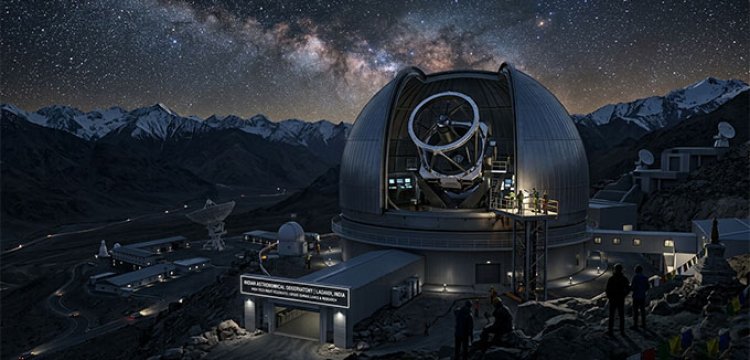
India is preparing to take a significant leap in space monitoring with plans to set up an advanced night telescope in the high-altitude region of Ladakh. The project aims to enhance the country’s ability to track space objects with greater precision during nighttime.
The proposed telescope will be installed at an altitude of around 4,500 meters. According to experts, Ladakh offers ideal conditions for astronomical observation due to its clear skies, low light pollution, and dry atmosphere. These factors make it easier to detect distant celestial bodies and monitor space debris effectively.
The project is not limited to astronomical research. It is expected to play a crucial role in satellite monitoring, tracking space debris, and identifying potential threats in orbit. This will significantly strengthen India’s space security infrastructure.
The initiative is likely to involve key scientific bodies, including Indian Space Research Organisation, and will use advanced sensors and tracking systems capable of delivering high-accuracy data even at night.
With the growing number of satellites and debris in space, global concerns around space safety have increased. In this context, the Ladakh telescope project could position India among leading nations in space surveillance and research.
At the policy level, such initiatives reflect the government’s focus on strengthening technological and strategic capabilities. Under the leadership of Prime Minister Narendra Modi, India has been consistently pushing forward in space technology and infrastructure development.
While detailed timelines and budget specifics are yet to be officially disclosed, experts see this project as a potential game-changer for India’s space program.
If executed as planned, Ladakh could emerge not only as a major tourist destination but also as a global hub for astronomical research.










)